Postgraduate
Duration 2 Years


The student taking exit from three year BSc Food science and technology , have to enrol for MSc Food Science and Technology 2 year programme whereas, student completing four year BSc (Hons) Food Science and Technology programme can enter the second year Masters programme i.e. the student has to complete one year of master’s programme, third and fourth semester.
Each course shall have credits assigned to it. Student shall be required to register courses every semester for as many courses/credits specified under “Elective Courses Basket” depending upon his/her interest, capability/pace of learning and availability of time slot (without any clash in time table) so as to earn all required total credits under the “Elective Courses Basket” during the entire programme duration.
However, for registration of courses (including courses under “Compulsory Courses Basket”, “Elective Courses Basket” and Previous Semester Courses (wherein he/she was declared in eligible on the basis of attendance or he/she could not clear the course within permissible given chances), if any the maximum limit in a semester shall be 36 credits.
Manav Rachna offers a unique educational experience that combines academic excellence, practical exposure, and industry partnerships to equip students with the skills needed for real-world success.
Alumni Imprints Globally
Published Research Papers
MNC's & Indian Corporate Recruit
Patents (Filed/Granted)
Global Academic Collaborations
Alumni & In-Campus Startups
Countries with Footprints
Highest CTC Offered
BSc in Food Science and Technology /Food Engineering/Food Chemistry/Biotechnology/ Microbiology/Biochemistry/Agriculture/Physiology/Nutrition/Life Sciences or any other related field with a minimum of 50% marks.
or
PG Diploma in Agriculture/Food science/ Food Technology/Biotechnology/Food Safety and allied fields.
or
Bachelors of vocational studies (B.VoC) in Food Processing and preservation/Food Technology/Food Safety.
Scholarship Programme - Utkarsh and Uttam
Qualified and skilled faculties with Academia and Industrial experience
Practical and skill-based curriculum with assured job placements
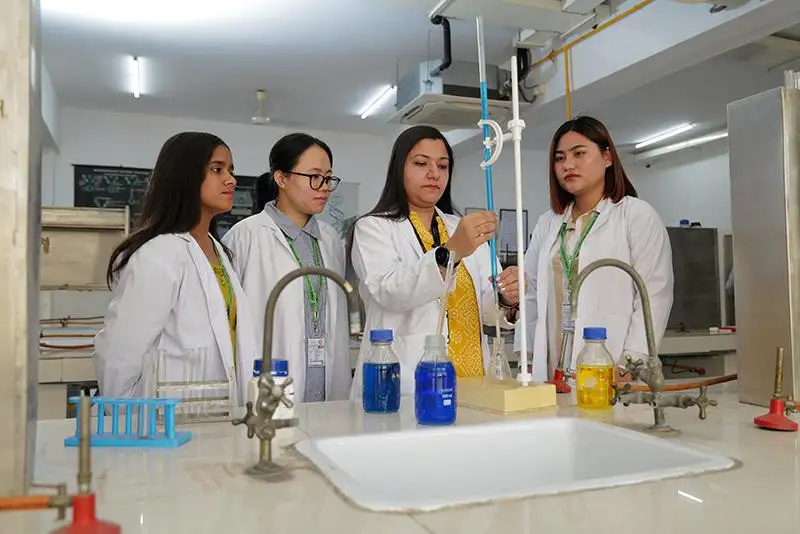
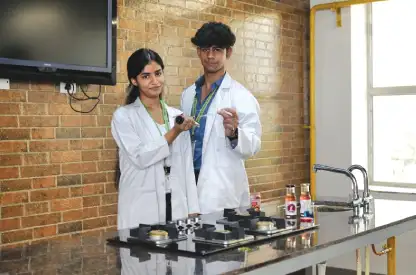
State-of-the-art Food science and Analytical laboratories.
Department offer interdisciplinary courses through NEPTL/SWAYAM/MOOC platform.
Department organises various competitions/innovative programmes/workshop/seminars in the food science field like Ayurveda day, Texture Analyser workshop, Hands on workshop on Kjeldhal and Soxhlet instruments, World Food Day etc.
Practical knowledge of the principles underlying food processing, preservation techniques, food engineering, packaging methods etc. to apply in research and development.
Understanding of the food composition and its physico- chemical, nutritional, microbiological and sensory aspects.
Understanding of significance of food safety and quality, food laws and regulations, control and management in food industry
Holistic development of Students to be placed at various Industries/ Research labs / Colleges / Universities / Hospitals, also to be an Entrepreneur / Food Consultants / Food handler/ Food Technologist, Food Engineer, Sensory Evaluator, Food inspector, Food safety Auditor, Food Analyst, Food Microbiologist etc.
Mandatory Hands-on training/Internship in Food Industries like Amul, Parle, FSSAI, Brittania, Mother Dairy, Nestle, Coca- Cola etc.
DST funded 7 start-up projects on food waste management, value-added products and innovative projects are running in the Department.
Consultancy based project on “Edible Packaging” for “Nutra Supplement” Pvt Ltd. Pune.
DST funded project for the development of millet based probiotic.
Active collaboration with
Outstanding career opportunities in:
Why Pursue a Master of Science degree in Food Science and Technology?
Course Fee (Annual): INR 1,74,200 US $ 3300
Duration: 2 Years
Modes of Payment
We at Manav Rachna offer generous residential facilities and convenient transportation services so that each student, including those studying Manav Rachna, gets to enjoy a safe, comfortable, and fulfilling campus life.
MREI provides on-campus and off-campus hostel facilities for boys and girls with various types of rooms. Students can choose single, double, and triple rooms as per their preference.
Key Points
Room Types: The hostels offer different types of rooms to suit different budgets and preferences:
Fee Structure: The hostel fee is to be paid on the basis of the room category chosen by the student and it can be paid through DD (Demand Draft) or in cash.
Additional Facilities:
At Manav Rachna, we offer world-class sports facilities to keep our students fit and active. Our facilities comprise a range of outdoor and indoor games, including:
Mess plan also comes as part of hostel fee. Healthy food is served through the mess considering the multicultural requirements of different food habits for the students. By providing choices involving vegetarian as well as non-vegetarian options, healthy lifestyle is available for the students enabling them to pursue their studies focusing on programs with full seriousness.
Notable facilities include:
The facilities enable students to pursue physical exercises that complement their academic development.
Laundry facilities are available at an extra fee in the hostel fees. This saves students from worrying about laundry, so they can focus on their studies, and also allows their clothes to remain properly cleaned.
There is a vast parking space facility available for students who commute using their own means of transport. It is provided to cater to the requirements of students, so that their travel will be easy and hassle-free.
Our well-maintained transport facility offers a stress-free, secure, and safe journey for students from Delhi and Gurugram. The GPS-located, contemporary fleet of buses is operated by professionally trained personnel, with onboard support staff to assist students. Our emphasis is on reliability, safety, and convenience, ensuring unproblematic travel to and from the campus.
Manav Rachna offers a unique educational experience that combines academic excellence, practical exposure, and industry partnerships to equip students with the skills needed for real-world success.
Log in to www.manavrachna.edu.in and click on the Admissions link.
Click on "Apply Now," generate your login credentials, and fill out the form with your personal, educational, and contact information.
Fill in the application by paying online using net banking, debit/credit card, or UPI.
Get qualified through MRNAT (Manav Rachna National Aptitude Test) or produce a valid JEE Main score for merit-based admission.
Program Outcomes (PO's)
Critical Thinking
Take informed actions after identifying the assumptions that frame our thinking and actions, checking out the degree to which these assumptions are accurate and valid, and looking at our ideas and decisions (intellectual, organizational, and personal) from different perspectives.
Effective Communication
Speak, read, write and listen clearly in person and through electronic media in English and in one Indian language, and make meaning of the world by connecting people, ideas, books, media and technology.
Social Interaction
Elicit views of others, mediate disagreements and help reach conclusions in group settings.
Effective Citizenship
Demonstrate empathetic social concern and equity centred national development, and the ability to act with an informed awareness of issues and participate in civic life through volunteering.
Ethics
Recognize different value systems including your own, understand the moral dimensions of your decisions, and accept responsibility for them.
Environment and Sustainability
Understand the issues of environmental contexts and sustainable development.
Self-directed and Life-long Learning
Acquire the ability to engage in independent and life-long learning in the broadest context socio-technological changes
Program Specific Outcomes (PSO's)
Enable students to acquire scientific knowledge of various areas related to Food science and technology.
Expressing a broad understanding of the food composition and its physico- chemical, nutritional, microbiological and sensory aspects.
Enhance practical knowledge of food science and the principles underlying food processing, preservation techniques, food engineering, packaging methods etc. to apply in research and development.
Understand significance of food safety and quality, food laws and regulations, control and management in food industry.