Undergraduate
Duration 3 Years


The B.Tech in Electronics and Communication Engineering (Lateral Entry) program is designed for diploma holders aiming to upgrade their qualifications and enter directly into the second year of engineering. The curriculum offers a strong foundation in electronic circuits, communication systems, signal processing, and embedded technologies. Emphasis is placed on practical skills, industry-relevant tools, and innovation-driven learning. This program prepares students for careers in core electronics, telecommunications, embedded systems, automation, and IT sectors. Graduates are also eligible for competitive exams and higher education opportunities in India and abroad..
Specializations Offered
The B.Tech ECE (Lateral Entry) program offers a specialization in VLSI and Embedded Systems OR Communication Systems and enables students to further their expertise in certain areas of electronics and communication.
Program Details
Course name: B.Tech ECE ( Lateral Entry ) ) with specialization in VLSI and Embedded System/ Communication Systems
Duration: 3 yrs. (6 Semesters)
The lateral entry B.Tech ECE is aimed at diploma holders seeking higher qualifications and skill set. The course is delivered over 6 semesters; it provides students with a well established framework for developing technical knowledge and skills of theory and practice associated with electronics and communication engineering.
Manav Rachna offers a unique educational experience that combines academic excellence, practical exposure, and industry partnerships to equip students with the skills needed for real-world success.
Alumni Imprints Globally
Published Research Papers
MNC's & Indian Corporate Recruit
Patents (Filed/Granted)
Global Academic Collaborations
Alumni & In-Campus Startups
Countries with Footprints
Highest CTC Offered
The applicants should have obtained a minimum of 45% marks in a 3-year Diploma in Engineering in any discipline/branch from a State Board of Technical Education or an equivalent exam. Or, applicants with B.Sc. degree from a recognized university as per the UGC's definition must have a minimum of 50% marks and must be math graduates at the 10+2 level.
Admission Criteria
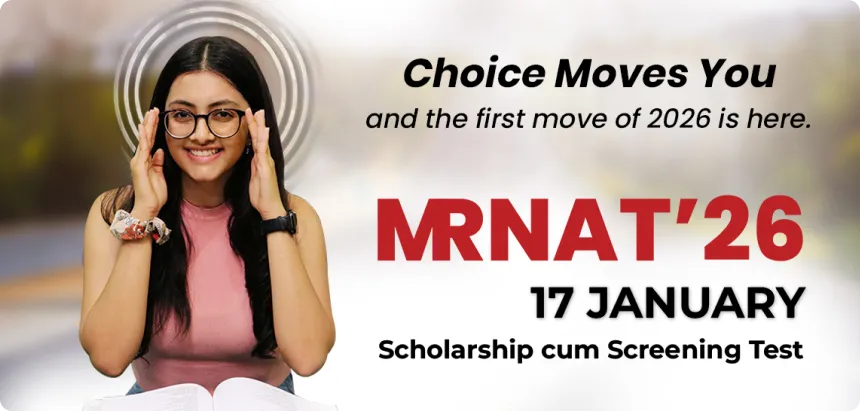
Meritorious selection based on performance in the MRNAT exam
Nationality
Indian and foreign candidates can apply for the program.Indian and foreign candidates can apply for the program.
Selection Criteria
According to the above-mentioned admission guidelines.
Scholarship Scheme
Merit scholarship to meritorious students, up to 100% fee concession.
The B.Tech ECE (Lateral Entry) programme with specialisation in VLSI and Embedded Systems / Communication Systems offers a robust industry interface to ensure career-readiness:
Why pursue?
The B-Tech in Electronics and Communication Engineering (Lateral Entry) courses in Artificial Intelligence and Internet of Things (AI and IoT) reinforces your understanding of electronics and gets you ready to pursue an ever-growing world of digital technology. The course instructs for technical roles in Electronics and Computer Sciences. This course includes hands-on experience with industry leaders such as Intel and NVIDIA, which gives you experience working with intelligent systems, embedded computing, and development and use of connected devices. The units will evolve based on future technologies as well as allowing courses to investigate innovative ideas when it comes to smart cities, IoT security, edge computing, and AI-enabled embedded systems. Our goal is not only to place students into pure technical roles, but also into opportunities in Indian Engineering Services (IES) and many more. The support in careers not only enhances the student's academic potential and trajectories; it and our connections, help enhance all other career pathways and opportunities through support, placements, and links with key employers (such as Aluminium & Non-ferrous, AI & IoT, Aerospace, Defence, etc).
Placement Support
B.Tech ECE (Lateral Entry) students have placed in companies from communication, VLSI, and IT sectors. Major placements are Srinidhi at Lumiq, Haryana (₹8 LPA), Anuvart Kumar at Sahasra (₹4 LPA), Simran at KPMG (₹4 LPA), Saurav Gosain at EvalueServe, Haryana (₹5 LPA), Manjudha Sai Lakshmi at Vivo, Greater Noida (₹4.2 LPA), Vishnu Vardhan, and Alekhya at Launched (₹5 LPA). Students have also been placed in companies such as Cadence, Sagedel., and even IIT Delhi.
To enable skill building, workshops, and training sessions on tools such as LAM Simulator, Synopsys, and Cadence are held. Capstone projects are executed in Embedded Systems, IoT, Wireless Communication, Signal and Image Processing, and VLSI Design. Students also perform research in Communication Systems, IoT Security, and Biomedical Engineering.
Capstone Project & Research
The curriculum includes hands-on workshops and skill-oriented sessions using tools such asthe LAM Simulator, Synopsys, and Cadence Software for practical learning. Such endeavors have aided in situating theoretical knowledge into actuality for these students. The Capstone Projects constitute an important part of the academic experience, carrying out hard-hitting solutions to industry-oriented problems in Embedded Systems, IoT, Wireless Communication, Signal/Image Processing, and VLSI Design. Research activities are under way-including the institute's faculty and student members-in Communication Systems, IoT Security, Artificial Intelligence, and Biomedical Engineering.
Placement Statistics
Around 75% of students have got placed in reputed companies in core electronics, IT, and communication sectors.
Global Exposure
The programme is geared towards giving students the opportunity for international certification or higher studies and specialised training to fulfil their dreams of undertaking global career prospects.
Innovation & Startups
Manav Rachna Business Incubator assists students, alumni, and faculty with an inclination towards research, innovation, and entrepreneurship. Besides today's state-of-the-art design, fabrication, and prototyping facilities, it also provides mentoring, investor networking, and various training programs. Furthermore, the incubation centre takes care of all regulatory, financial, and administrative work, allowing early-stage ventures to grow sustainably.
Alumni Network
The alumni network of the B.Tech. ECE is growing and contributing across fields. Aditya Aggarwal and Robin Singh are Design Engineers at Intel, California. Arpit Miglani is part of the Google hardware design team. Akshay Angaria is Hub Manager for GSAT19 at ISRO. The programme has also grown successful in creative fields, with Yashu Meel pursuing choreography while Sumit Kumar is engaged with the film industry as an actor and director.
Student Achievements
The B.Tech ECE (Lateral Entry) students have made outstanding achievements in both academic and extracurricular fields. Anuvrat Kumar and Kartik Kachhawa have won the national round of the Microsoft Imagine cup 2023. Some students got opportunities for internships and future placements with reputed companies like Ms. Boddu Alekhya and Mr. Pasupuleti Brahma Viskhu Vardhan with Launched, Mr. Abhishek Verma with Sagedel, and Mr. Yechuri Manjunadha with Vivo. Mr. Mohammad Saad has cleared the GATE 2025. Many teams were awarded at the university's annual technical festival Innoskill 2025: Mr. Manikanta, Mr. Dogga Hema Prasad and Mr. Eshwar bagged the Srijan 2nd prize, Mr. Prashant's team won the 1st prize in Vista Vibes and Mr. Prashant Chauhan and Mr. Jay Deekshith won the second prize alongside his team. Mr. Samarth Dhiman and Mr. Vansh Vishi won 1st Prize in the 'Build a Circuit' competition while the team of Mr. T. Venkata Uma Mahesh, Mr. K. Eswar, Mr. Vignesh Karumuri, Mr. Surya Nikhil, and Mr. D. Charan won the 2nd prize.
Best Practices
The department is engaged in promoting internships during academic breaks to assist students with problem-solving abilities and industry experience. A structured mentoring scheme is in place, where each faculty member is allocated a bundle of 30 students to track their academic performance and offer advice as needed. Furthermore, students are included in a tree plantation drive as part of the orientation programme addressing the Go Green initiative, which increases awareness of the environment and society.
Course Fee (Annual): INR 1,92,700 US $ 4000
Duration: 3 Years
Modes of Payment
We at Manav Rachna offer generous residential facilities and convenient transportation services so that each student, including those studying Manav Rachna, gets to enjoy a safe, comfortable, and fulfilling campus life.
MREI provides on-campus and off-campus hostel facilities for boys and girls with various types of rooms. Students can choose single, double, and triple rooms as per their preference.
Key Points
Room Types: The hostels offer different types of rooms to suit different budgets and preferences:
Fee Structure: The hostel fee is to be paid on the basis of the room category chosen by the student and it can be paid through DD (Demand Draft) or in cash.
Additional Facilities:
At Manav Rachna, we offer world-class sports facilities to keep our students fit and active. Our facilities comprise a range of outdoor and indoor games, including:
Mess plan also comes as part of hostel fee. Healthy food is served through the mess considering the multicultural requirements of different food habits for the students. By providing choices involving vegetarian as well as non-vegetarian options, healthy lifestyle is available for the students enabling them to pursue their studies focusing on programs with full seriousness.
Notable facilities include:
The facilities enable students to pursue physical exercises that complement their academic development.
Laundry facilities are available at an extra fee in the hostel fees. This saves students from worrying about laundry, so they can focus on their studies, and also allows their clothes to remain properly cleaned.
There is a vast parking space facility available for students who commute using their own means of transport. It is provided to cater to the requirements of students, so that their travel will be easy and hassle-free.
Our well-maintained transport facility offers a stress-free, secure, and safe journey for students from Delhi and Gurugram. The GPS-located, contemporary fleet of buses is operated by professionally trained personnel, with onboard support staff to assist students. Our emphasis is on reliability, safety, and convenience, ensuring unproblematic travel to and from the campus.
Manav Rachna offers a unique educational experience that combines academic excellence, practical exposure, and industry partnerships to equip students with the skills needed for real-world success.
Log in to www.manavrachna.edu.in and click on the Admissions link.
Click on "Apply Now," generate your login credentials, and fill out the form with your personal, educational, and contact information.
Fill in the application by paying online using net banking, debit/credit card, or UPI.
Get qualified through MRNAT (Manav Rachna National Aptitude Test) or produce a valid JEE Main score for merit-based admission.
Program Outcomes (PO's)
Engineering knowledge: Apply the knowledge of mathematics, science, engineering fundamentals, and an engineering specialization to the solution of complex engineering problems.
Problem analysis: Identify, formulate, review research literature, and analyze complex engineering problems reaching substantiated conclusions using first principles of mathematics, natural sciences, and engineering sciences.
Design/development of solutions: Design solutions for complex engineering problems and design system components or processes that meet the specified needs with appropriate consideration for the public health and safety, and the cultural, societal, and environmental considerations.
Conduct investigations of complex problems: Use research-based knowledge and research methods including design of experiments, analysis and interpretation of data, and synthesis of the information to provide valid conclusions.
Modern tool usage: Create, select, and apply appropriate techniques, resources, and modern engineering and IT tools including prediction and modeling to complex engineering activities with an understanding of the limitations.
The engineer and society: Apply reasoning informed by the contextual knowledge to assess societal, health, safety, legal and cultural issues and the consequent responsibilities relevant to the professional engineering practice.
Environment and sustainability: Understand the impact of the professional engineering solutions in societal and environmental contexts, and demonstrate the knowledge of, and need for sustainable development.
Ethics: Apply ethical principles and commit to professional ethics and responsibilities and norms of the engineering practice.
Individual and team work: Function effectively as an individual, and as a member or leader in diverse teams, and in multidisciplinary settings.
Environment and sustainability: Communicate effectively on complex engineering activities with the engineering community and with society at large, such as, being able to comprehend and write effective reports and design documentation, make effective presentations, and give and receive clear instructions.
Environment and sustainability: Demonstrate knowledge and understanding of the engineering and management principles and apply these to one’s own work, as a member and leader in a team, to manage projects and in multidisciplinary environments.
Environment and sustainability: Recognize the need for and have the preparation and ability to engage in independent and life-long learning in the broadest context of technological change.
Program Specific Outcomes (PSO's)
PSO1
Connect learning from Core and Disciplinary/Interdisciplinary elective courses of Electronics and Communication Engineering to assimilate technological advancements in the field for analyzing and designing subsystem processes to arrive at the solution to real world problems.
PSO2
Acquire hardware and software skills pertinent to research and industry practices in the field of Electronics & Communications while acquiring soft skills like persistence, proper judgment through projects and industrial interactions.
PSO4
Ability to identify indigenous processes and components for producing high quality, compact, energy efficient and eco-friendly solutions at affordable prices for existing and new applications directly and indirectly related to Electronics & Communication industry.
PSO5
Focus on acquiring right blend of aptitude and attitude so as to be the candidate of first choice for placements and higher education or to become a successful Entrepreneur and a worthy global citizen.