Postgraduate
3 Years
B.Tech Computer Science and Engineering (CSC)
By clicking, I authorize Manav Rachna to contact me via Email, SMS, WhatsApp, Call, or RCS, overriding DND/NDNC.


Clinical Training
Specializations
Advanced Specializations in Endodontics
Clinical and Research Training
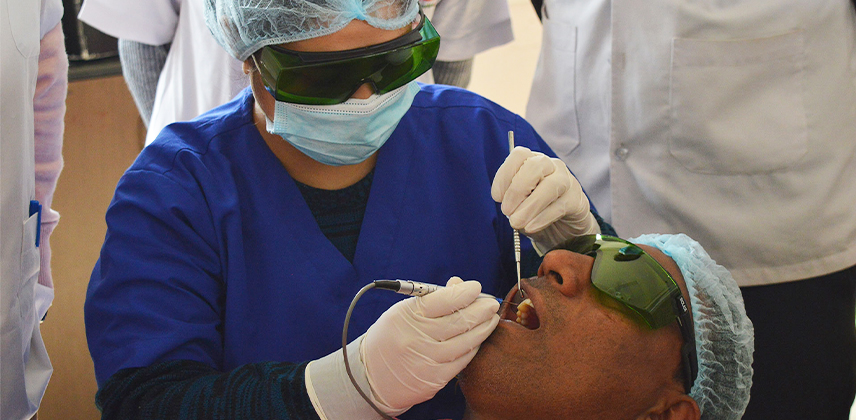
Institutions offering this MDS program provide training in advanced techniques such as laser-assisted cavity and root canal preparations, micro-surgical procedures for periapical pathologies, regenerative treatments for deep carious lesions, and multidisciplinary approaches for complex clinical cases.
This MDS in Conservative Dentistry and Endodontics program equips students with comprehensive knowledge and practical skills in dental endodontics, preparing them for advanced clinical practice, research, and academic careers.
The MDS in Conservative Dentistry and Endodontics is a three-year program that combines theoretical knowledge with hands-on experience in a well-rounded way. There are four papers in the curriculum: Paper I is about applied anatomy, physiology, pathology, and dental materials. Paper II is about conservative dentistry and aesthetic dentistry. Paper III is about endodontics. Paper IV has essay questions that are both descriptive and analytical.
There are at least 34 dental chairs in the department to handle 100 admissions, and the clinical area is about 25,000 square feet for undergraduate training. There are places for restorative procedures, endodontic treatments, and cosmetic dentistry, so students have the tools they need to learn by doing.
The DCI MDS Course Regulations 2017 say that the syllabus is tested through a mix of theory tests, clinical evaluations of practical skills in conservative and endodontic procedures, and a dissertation research project that students do during the course.
Manav Rachna offers a unique educational experience that combines academic excellence, practical exposure, and industry partnerships to equip students with the skills needed for real-world success.
Alumni Imprints Globally
Published Research Papers
MNC's & Indian Corporate Recruit
Patents (Filed/Granted)
Global Academic Collaborations
Alumni & In-Campus Startups
Countries with Footprints
Highest CTC Offered
To get into MDS in Conservative Dentistry and Endodontics, you need to have a Bachelor of Dental Surgery (BDS) degree from a dental school or university in India that is well-known. Once you pass the last BDS exam, you have to do a 12-month rotating internship and sign up with the State Dental Council, either for a short time or for good.
The National Board of Examinations runs the National Eligibility cum Entrance Test for MDS (NEET-MDS). Anyone who wants to take it has to pass it. You need at least 55% of your BDS marks for the General category and at least 50% for the SC, ST, OBC, and PWD categories.
The Dental Council of India does not set an age limit for people who want to get into MDS. People from India and other countries can both apply. Foreign nationals must sign up with the Dental Council of India for the time they are doing their postgraduate training. This is only true if both the Dental Council of India and the authority in their home country recognise their basic dental qualification.
Nationality
Indian nationals are eligible to apply for MDS programs in Conservative Dentistry and Endodontics if they meet the following criteria: they must possess a Bachelor of Dental Surgery (BDS) degree from a Dental Council of India (DCI)-approved institution, have completed a 12-month compulsory rotating internship, and hold provisional or permanent registration with the State Dental Council. Additionally, candidates must qualify in the National Eligibility cum Entrance Test for MDS (NEET-MDS) to be considered for admission.
Selection Criteria
1. What you need to know for school
Candidates must have a Bachelor of Dental Surgery (BDS) degree from a well-known college or university that teaches dentistry. After passing the last BDS exam, you have to do a 12-month rotating internship. You also have to register with the State Dental Council, which can be for a short time or for good.
2. Do the entrance test
The National Board of Examinations runs the National Eligibility cum Entrance Test for MDS (NEET-MDS). Everyone who wants to take it has to pass it. For the General category, you need to get at least 55% in BDS. The lowest score for SC, ST, OBC, and PWD groups is 50%.
3. Giving advice and assigning seats
Centralised counselling based on NEET-MDS scores is used to decide who gets in. The Directorate General of Health Services (DGHS) or the right state authorities are in charge of giving out seats.
4. Things You Need
Candidates must send in original copies of the NEET-MDS admit card, the result or rank letter, the BDS degree, the internship completion certificate, and the registration certificate. People who are applying under reserved categories must also send in the right caste or disability certificates.
1. Program Duration
The program usually lasts three years and includes both theoretical lessons and practical training.
2. Curriculum and training
Students learn a lot about the theory behind advanced restorative procedures, dental anatomy, dental materials, cavity preparation, dental radiology, and pulp therapy. Practical exposure includes a lot of hands-on work with hard procedures like endodontic surgeries, aesthetic restorations, and root canal treatments. Managing real cases is part of clinical training, which lets students figure out what's wrong with a lot of different dental problems and fix them. The program also lets students do research, which is graded by the teachers. Students are urged to get involved in case studies, presentations, and research projects. The program includes a lot of work on ethics and professional growth. They teach you things like how to be ethical at work, how to talk to patients, and how to keep learning for the rest of your life.
3. Infrastructure like buildings
Students can use modern tools like digital radiography, rotary endodontic tools, and dental microscopes. There are labs just for research and preclinical work. Working in outpatient departments gives you hands-on experience with a lot of different dental procedures.
4. Job openings
Graduates can open their own businesses that focus on restorative and endodontic treatments, teach at dental schools and universities, help with research and development in dental science, or work for companies that make dental products or healthcare organisations.
The first year is all about basic sciences that are useful in real life, like pharmacology, biostatistics, research methods, anatomy, physiology, pathology, and oral microbiology. Students learn about conservative dentistry by doing things like filling cavities and using restorative materials. You learn the basics of root canal therapy in endodontics. This includes how to prepare the access cavity, the biomechanical preparation, and the obturation. The main goal is to give students hands-on clinical training so they can use dental materials and advanced tools while doing restorative and endodontic work. The year also includes an introduction to research principles, study design, and data analysis. Faculty members also take common modules like clinical photography, life support, personality development, and legal issues that are important for dental professionals.
In their second year, students learn more advanced restorative procedures, like full crown preparations and indirect restorations. They also learn a lot about advanced endodontic techniques, such as how to handle tough cases, how to do retreatment, and how to do surgery-based endodontics. Even when the clinic is busy, students have to plan and carry out full treatments. When people have short-term tasks to do, like writing a dissertation for the library, getting ready for a conference, or finishing a project that only lasts a few weeks, they are more likely to do research. One brutal way to get ahead in your career and do better in your clinical and academic work is to take teacher training courses and other training programs outside of school.
Over the past year, I've been learning how to use new tools and methods to do more complex restorative and endodontic procedures. Students work with other dentists and healthcare workers to solve hard problems that need knowledge from more than one area. The last step in clinical and research training is to write a dissertation. It shows that the person can look up information on their own. Students still go to seminars and journal clubs, and they also teach and help undergraduate dental students. This helps them become better leaders and do better in school.
Manav Rachna has business incubators and innovation centres that help new businesses, ideas, and startups get started. The Manav Rachna Business Incubator is open all week long. The area is bigger than 5,000 square feet. It has helped more than 80 new businesses grow, and it gives students, alumni, and faculty the chance to turn their ideas into real businesses. There are a lot of different personalised, integrated support services at the incubator. They can help with money, rules, and how to run a business. They can also use design, fabrication, and manufacturing facilities. Participants get help from mentors and experts, and they also get to meet and talk to people who work with them, investors, and leaders in their field.
The Innovation and Incubation Centre (MRIIC) and the NewGen Innovation and Entrepreneurship Development Centre (IEDC) both have programs to help new and promising business owners learn new things, improve their skills, and get help with accelerators. These centres help new businesses get started by helping them find angel investors, government grants, and venture capital.
Manav Rachna is serious about coming up with new ideas because they hold hackathons, innovation challenges, and work with businesses all the time. At these events, students can work on real-world problems and projects that businesses need help with. Many research centres and labs in different fields are working on advanced research and development (R&D) and making new products.
There are a lot of groups and clubs on campus that help people be creative, take charge, and become better people. There are also alumni groups that are still going strong. This is good for the environment. The end result is a place where people can make their business dreams come true, new ideas are welcome, and startups can get all the help they need.
Why Pursue?
If you work in the corporate world and make, sell, and come up with new dental products, you could work with some of the biggest names in the business. People who have graduated can use what they learnt about the industry, business, and clinical work to help create, test, and sell new dental products.
There are a lot of great jobs in this field for people who want to come up with new business ideas, improve patient care, education, research, and public health.
Course Fee (Annual): INR 0 US $ 0
Duration: 3 Years
Modes of Payment
We at Manav Rachna offer generous residential facilities and convenient transportation services so that each student, including those studying Manav Rachna, gets to enjoy a safe, comfortable, and fulfilling campus life.
MREI provides on-campus and off-campus hostel facilities for boys and girls with various types of rooms. Students can choose single, double, and triple rooms as per their preference.
Key Points
Room Types: The hostels offer different types of rooms to suit different budgets and preferences:
Fee Structure: The hostel fee is to be paid on the basis of the room category chosen by the student and it can be paid through DD (Demand Draft) or in cash.
Additional Facilities:
At Manav Rachna, we offer world-class sports facilities to keep our students fit and active. Our facilities comprise a range of outdoor and indoor games, including:
Mess plan also comes as part of hostel fee. Healthy food is served through the mess considering the multicultural requirements of different food habits for the students. By providing choices involving vegetarian as well as non-vegetarian options, healthy lifestyle is available for the students enabling them to pursue their studies focusing on programs with full seriousness.
Notable facilities include:
The facilities enable students to pursue physical exercises that complement their academic development.
Laundry facilities are available at an extra fee in the hostel fees. This saves students from worrying about laundry, so they can focus on their studies, and also allows their clothes to remain properly cleaned.
There is a vast parking space facility available for students who commute using their own means of transport. It is provided to cater to the requirements of students, so that their travel will be easy and hassle-free.
Our well-maintained transport facility offers a stress-free, secure, and safe journey for students from Delhi and Gurugram. The GPS-located, contemporary fleet of buses is operated by professionally trained personnel, with onboard support staff to assist students. Our emphasis is on reliability, safety, and convenience, ensuring unproblematic travel to and from the campus.
Manav Rachna offers a unique educational experience that combines academic excellence, practical exposure, and industry partnerships to equip students with the skills needed for real-world success.
Log in to www.manavrachna.edu.in and click on the Admissions link.
Click on "Apply Now," generate your login credentials, and fill out the form with your personal, educational, and contact information.
Fill in the application by paying online using net banking, debit/credit card, or UPI.
Get qualified through MRNAT (Manav Rachna National Aptitude Test) or produce a valid JEE Main score for merit-based admission.
Program Outcomes (PO's)
Foundation Knowledge Skills
Of the fundamentals of dentistry with relevant scientific methods and principles of biological
functions.
Critical Thinking
To identify, formulate research literature and analyze scientifically various established facts and data
Patient Centered Care
To diagnose and manage various common dental problems encountered in general dental practice,keeping in mind the expectations and the right of the society to receive the best possible treatment available wherever possible.
Competency
Essential for the general dentist to begin independent, unsupervised dental practice and can self evaluate treatment effectiveness.
Emerging technologies
Create, select and apply appropriate techniques, resources and IT tools in all clinical disciplines and methods of preventive, diagnostic and therapeutic aspects of dentistry with an understanding of the limitations.
Health Promotion
To improve awareness and provide possible solutions for oral health problems and needs through out the community.
Environment and Sustainability
To understand the influence of the natural and social environment on the state of health as it affects dentistry and demonstrate the need for sustainable development.
Professionalism Ethics
To apply the current knowledge of dentistry in the best interest of the patient and maintain a high standard of professional ethics and conduct.
Individual and Team Work
To function effectively as an individual and as a member or leader in diverse teams, and in multidisciplinary settings so as to promote oral health and prevent oral diseases wherever possible.
Communication and Interpersonal Skills
To communicate effectively, give and receive instructions so as to control pain and anxiety among the patients in general dental practice during treatment as well as prevent and manage complications,if encountered.
Management
To help and participate in the implementation of National OralhealthPolicy.
Program Specific Outcomes (PSO's)
Describe etiology, pathophysiology, periapical diagnosis and management of common restorative and endodontic situations that will include contemporary management of dental caries, management of trauma and pulpal pathosis including periodontal situations.
Perform all levels of restorative work,surgical and non-surgical endodontics as well as endodontic-periodontal surgical procedures as part of multidisciplinary approach to clinical condition.
A Master of Dental Surgery (MDS) in Conservative Dentistry and Endodontics is a postgraduate dental degree. This program centers on identifying, preventing, and managing diseases and damage affecting tooth structure and the pulp. It covers restorative approaches such as fillings, crowns, and root canal therapy. The core goal is to save natural teeth, restoring both oral function and appearance.
Upon finishing this program, graduates are prepared for roles as endodontic specialists or restorative dentists, working in private practices, hospitals, or dental clinics. Moreover, they can opt for academic positions like faculty or researcher, or establish their own specialized dental business. The fields of cosmetic dentistry and forensic odontology are also presenting new possibilities.
This program provides students with sophisticated clinical abilities, up-to-date technologies, and extensive theoretical understanding. It allows for specialization, boosts earning possibilities, and offers chances to participate in dental science research and teaching.
Entry-level pay usually falls between ₹6 to ₹10 LPA, contingent on experience, abilities, and the employer. As proficiency grows or with independent practice, income can increase substantially, particularly in major cities or overseas roles.
The course covers topics including Dental Materials, Conservative Dentistry, Endodontics, Restorative Dentistry, Cosmetic Dentistry, Practical Endodontics, Research Techniques, and Fundamental Sciences related to the profession.
The need for capable endodontists is increasing alongside greater focus on oral well-being. The future encompasses progress in digital dentistry, laser therapies, and regenerative techniques. Academic research, cosmetic work, and international practice also offer considerable opportunities.
Manav Rachna offers placement assistance and career advice via its Career Development Centre. The university boasts robust connections with the industry, assisting students in seeking out diverse opportunities in clinical settings, academia, and corporate environments.
The top salary packages fluctuate yearly but can reach ₹12–15 LPA, particularly for those with strong clinical abilities, impressive academic records, or those seeking positions internationally or at leading hospitals.
Scholarships are offered depending on academic achievement, performance, and other requirements. Students can seek financial assistance during the admission procedure, as per university guidelines.
To apply, visit the official Manav Rachna website. Complete the online application form, submit required documents, and settle the application fee. Admissions will depend on NEET MDS scores, with counseling sessions adhering to university and regulatory standards.
Sector – 43, Aravalli Hills, Delhi – Surajkund Road, Faridabad – 121004, (Haryana), India
For Admission Queries
For Any Other Queries